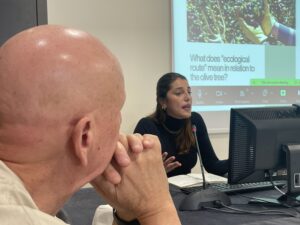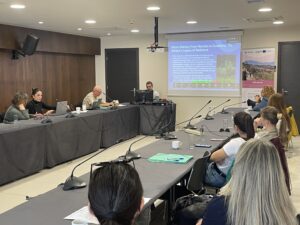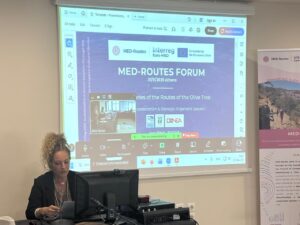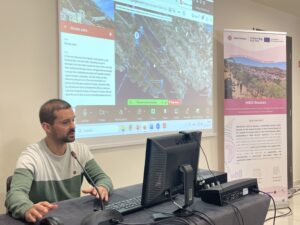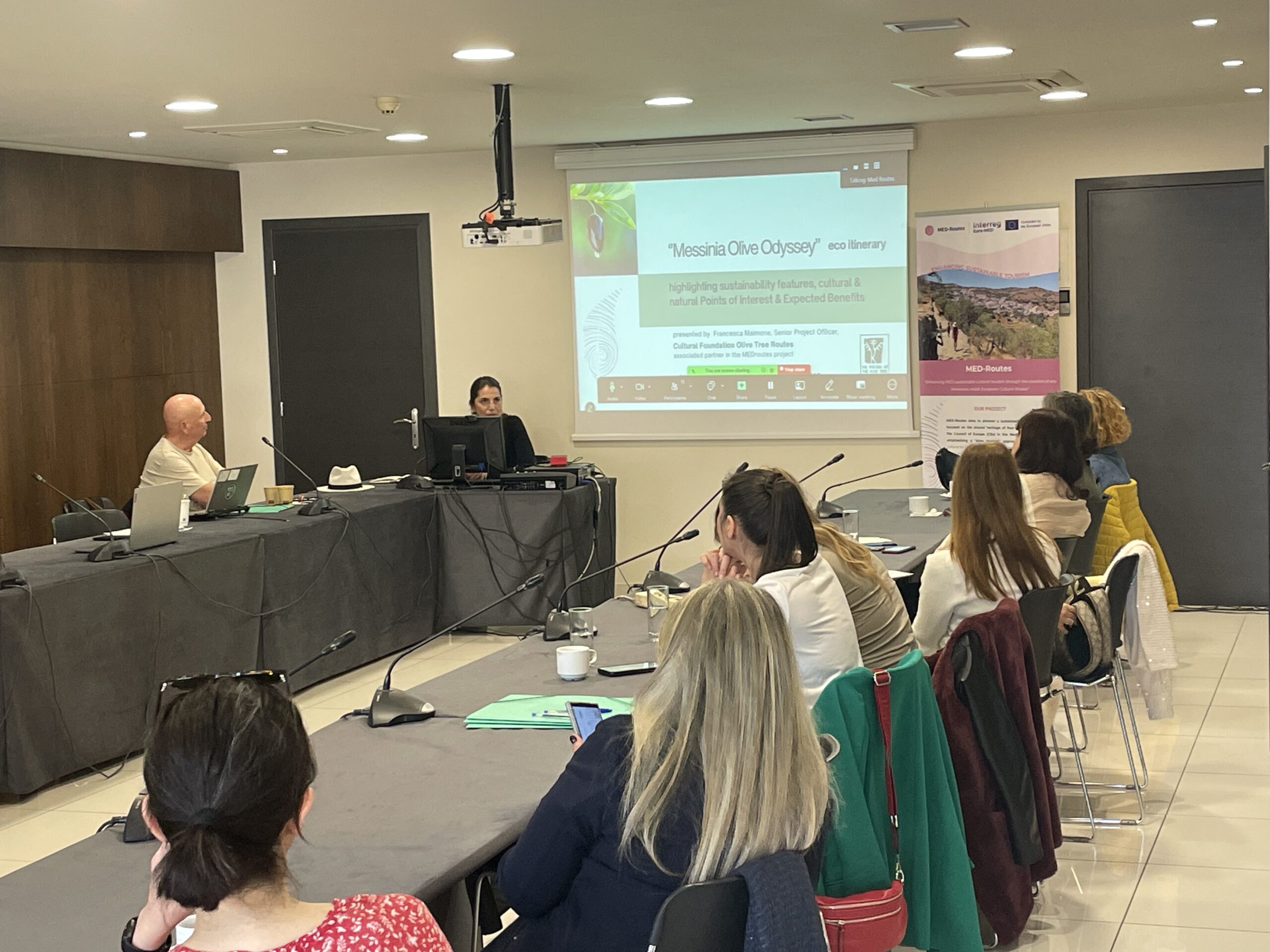

The Athens MED-Routes Forum, organized by INSULEUR, DUNEA and the Routes of the Olive Tree Cultural Foundation was held on 21 November 2025 at the Athens Chamber of Commerce and Industry and brought together project partners, Cultural Route representatives, and tourism stakeholders for a dynamic exchange on how eco-itineraries can contribute to a more sustainable and culturally grounded visitor experience across the Mediterranean.
Hosted in a hybrid format, the Forum highlighted the growing interest of Mediterranean territories in developing tourism models that respect heritage, reinforce regional identity, and promote slow and meaningful travel.
Setting the Stage for Collaboration
The session opened with remarks by Mr. George Asonitis, INSULEUR TC Member and EU Advisor at the Union of Hellenic Chambers of Commerce, who emphasised the importance of shared approaches to territorial sustainability and the added value of interregional cooperation within MED-Routes.
Participants were then introduced to the project’s overarching vision through a presentation by Mrs. Irene Mikélis, Communication Officer for MED-Routes and EU Project Manager at INSULEUR. Her intervention outlined the full cycle of eco-itinerary development — from initial conceptualisation to pilot testing and long-term sustainability — and showcased the tools & methodologies now available to support knowledge transfer among participants.
Showcasing Eco-Itineraries Through Storytelling and Digital Media
The heart of the Forum centred on the presentation of two eco-itineraries created within the MED-Routes framework with focus on the Route of the Olive Tree. Through the use of videos, maps, and narrative storytelling, speakers brought each destination to life, demonstrating how landscapes, traditions, and community histories can be translated into engaging visitor routes.
-
“Messinia Olive Odyssey” (Greece) was presented by Mrs. Francesca Maimone of The Routes of the Olive Tree Cultural Foundation. The itinerary highlights one of Greece’s most emblematic regions, blending agricultural heritage, landscapes shaped by millennia of olive cultivation, and the living culture that surrounds it.
-
“From Warriors to Guardians: The Adriatic’s Legacy of Resilience” (Croatia) was introduced by Mr. Duje Rezo of the Regional Development Agency of Dubrovnik–Neretva County (DUNEA). His presentation traced the transformation of the Adriatic narrative from conflict to custodianship, illustrating how local communities are redefining their relationship with heritage and the sea.
Both examples demonstrated how eco-itineraries can support cooperation across borders, amplify local identities, and promote more responsible tourism practices.
A Forum Strengthened by Cross-Route Participation
Representatives from the three additional Cultural Routes participating in MED-Routes — the Phoenicians’ Route, the European Route of Ceramics, and Destination Napoleon — also took part in the Forum. Their involvement underscored the project’s ambition to create a space where diverse Cultural Routes of the Council of Europe can learn from one another and jointly promote sustainable territorial development.
Through their exchanges, participants reaffirmed the value of bridging narratives, practices, and experiences across regions that share the Mediterranean as a cultural and environmental continuum.
Reinforcing Long-Term Commitment
In the spirit of continuity, the Forum confirmed the collective intention of partners to move forward with the signing of the Letter of Mutual Commitment and Support, marking an important step toward ensuring that the cooperation initiated under MED-Routes will continue beyond the project’s official timeframe.
The Athens Forum concluded with an open discussion among attendees, who shared reflections and identified ways to deepen collaboration, strengthen the visibility of eco-itineraries, and build on the momentum the project has generated across its four participating Cultural Routes.